We’ve used 5W2H to discuss Product Quality Control before, and now we’re using this popular tool to provide insight regarding process audits.

Who?
Quality auditors are often certified and/or have other applicable training specific to the types of audits they perform. Quality auditors must be professional, ethical and objective. They must be able to select appropriate quality and auditing tools and techniques and use them effectively in a variety of applications. In addition, they must verify, document and communicate results.What?
Per the ISO 9000 Quality Management Systems standard, a process is referred to as “a set of interrelated or interacting activities that transforms inputs into outputs.”Where?
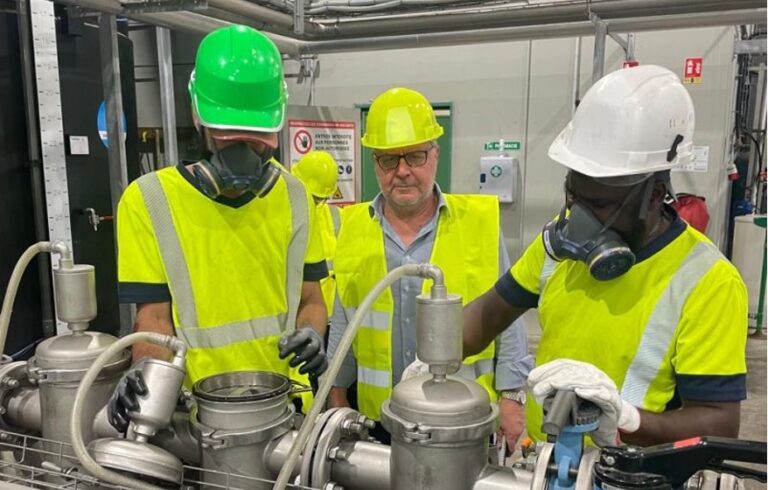
Auditors visit the supplier. Time on-site is allocated to observation and interviews.Why?
According to Harvard Business Review, “in virtually every industry, companies of all sizes have achieved extraordinary improvements in cost, quality, speed, profitability, and other key areas by focusing on, measuring, and redesigning their customer-facing and internal processes.Benefits of a process audit include:
Conducting an audit is perhaps the most effective way to gain insight into the inner workings of your business. An audit will help you identify strong points and areas of weakness within your business, making it much easier to form a strategy for improvement and increased productivity. Identifying defect opportunity points in the production process, enabling the creation of preventive measures to reduce the potential for nonconformities. Evaluating process inputs and outputs allows for continuous improvement, higher quality and increased efficiency (reduced cost).How?
Jean Champlain, Pro QC’s Supplier Development Manager in Ningbo, China, identifies process audits in two ways. He first references a standard called VDA 6.3 that provides more detail regarding what a process is and how it works. Originally used in the automotive industry to support ISO/TS 16949, the following networks of processes were defined with each process having inputs and outputs. Processes are linked together in such a way that outputs from one process could be inputs for another process. Process examples: Employee Hiring Employee Training Vendor Selection and Management Product Realization Equipment Maintenance Calibration Incoming Inspection The requirement of process approach in ISO/TS 16949, for example, is that each process should be clearly identified in such way: a) Inputs (What does this process need?) b) Methods (How does it work? Work Instructions) c) Monitoring (How do you control the performance?) d) Responsible (Who is in charge of this process?) e) Equipment (What tools are needed?) f) Outputs (What is the expected result of this process?) The second way in which we refer to a process audit is with a customized evaluation we designed to meet client needs. Our Manufacturing Process Audit focuses on processes that are more directly involved in the manufacturing of a specific product. More specifically, using our client’s specifications and drawings, we follow the manufacturing line step-by-step and check that each process is clearly identified and structured in the manner to produce the expected output, while identifying potential defect opportunity points throughout the process stream. Understanding processes so that they can be improved by means of a systematic approach requires the knowledge of a simple kit of tools or techniques. Quality tools frequently used include: Cause & Effect Analysis Pareto Analysis Histograms Control Charts Process Maps Scatter Diagrams Force Field Analysis Statistical Process Control (SPC)How Much?
Process audits vary depending on the time required. Variables include the size of the facility, process complexity, quality of existing documentation, etc.For a more detailed quotation, contact us directly. Sample reports are also here. This article was originally posted to Pro QC’s newsletter, V9I2. Due to positive feedback received, we have reposted here to our blog.