Quality control inspections started out as a relatively primitive process, as a way of catching variance in newly developed production systems. The demand likely evolved as it does with many of Pro QC’s new clients. Someone got the product from a supplier that didn’t meet their expectations. And, that meant increased costs, delays, impact on branding, etc. It’s a timeless tale.
Using Statistical Quality Control (SQC) starting in the 30s, the QC inspection introduced a reliable way of evaluating a randomly selected production lot. Inspections were conducted at different stages throughout the production process, with the most common being the pre-shipment inspection.
Historically, inspections were conducted and the result would be a go/no-go on the shipment. Sorting and rework were often the default way of handling issues, and the buyer felt assured of the quality and could rest easy knowing that the risk and cost were reduced for that particular order.
But, quality control has evolved into something bigger, more impactful than a singular check of product at a moment in time. For many companies, it has developed into a program of supplier development.
When Pro QC started, fax machines were the primary way of communicating inspection results and other details. There weren’t any online reports, videos, or digital photos. Imagine that.
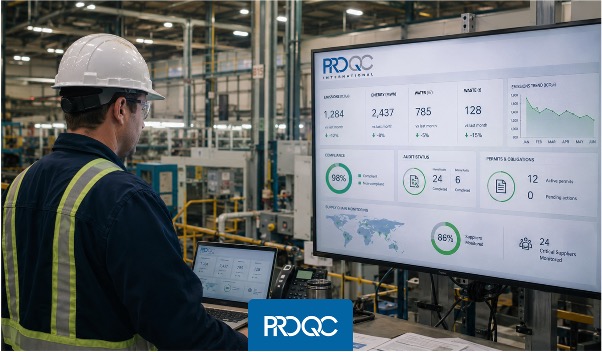
Fast forward a few decades, and we now leverage our own supply chain management system that offers an in-depth look at the performance of suppliers using the data we capture while on-site.
 In addition, product conformance analytics can be evaluated in a number of ways:
What data do our clients find useful?
A product defectives analysis can include various details:
- Appearance attributes
- Functional attributes
- Labels and artwork
- Packaging and labeling
- Manufacturing
- Location
- Suppliers
- Product categories
- 80/20 – Top defects
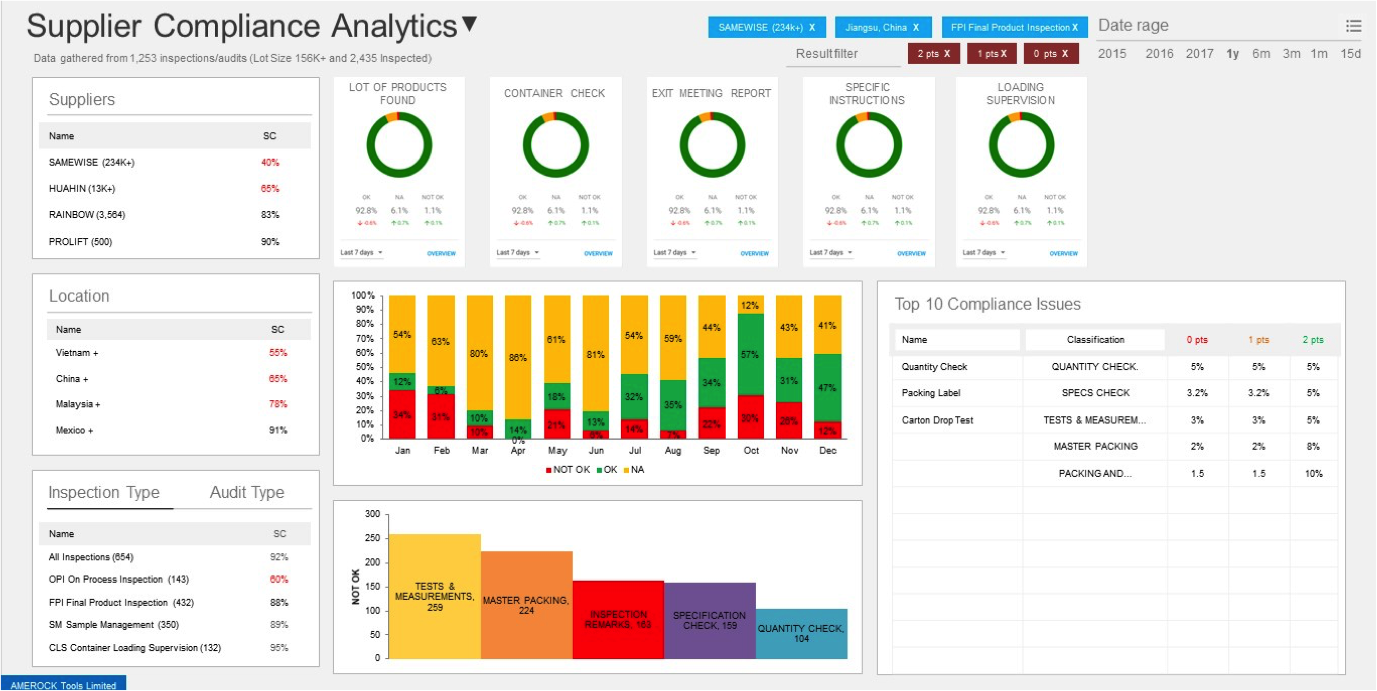 In addition, product conformance analytics can be evaluated in a number of ways:
- Suppliers
- Location
- Product categories
- Quantity check
- Master packing
- Specifications
- Tests & measurements
- Workmanship
- 80/20 – Top non-conformance issues