Efficiency and responsiveness can significantly impact the sustainability of a business in situations where competitiveness is pitted against the high demands of consumers. As a result, supplier evaluation has become an important component of the operational strategy of numerous companies that manufacture or purchase in countries that are potentially attractive due to their proximity to target markets and low labor costs.
This is the case of Mexico, which is currently experiencing a critical period in its industrial development. The country has become the focus of international companies due to the reconfiguration of global supply chains, driven by nearshoring and geopolitical changes. In order to fortify their presence in North America, an increasing number of organizations are either relocating their production facilities or seeking out local suppliers.
The search and selection of suppliers is not only about verifying prices or delivery times: nowadays, selecting a supplier implies understanding its real capacity to consistently comply, adapt to demanding standards, and align with the values of the buyer’s company. And when we talk about supply chains that cross borders and sectors, having a solid evaluation base is not a formality; it is a critical necessity.
Sometimes, what seems like a simple choice of supplier turns, without us realizing it, into a decisive factor for the success (or failure) of an entire operation. In Mexico, where the manufacturing industry continues to consolidate itself as a strategic option for global companies, knowing how to choose a supplier to partner with is more important than ever.
Why Supplier Evaluation is Relevant in Mexico
Mexico, as we know, occupies a key place in the reconfiguration of global supply chains. Many companies have relocated operations from Asia to be closer to the United States and reduce logistical risks. The famous “nearshoring” is a reality that is transforming the way business is done in the region.
However, with an opportunity like this also come challenges. Not all suppliers are prepared to meet the demands of international clients. Some have good intentions but lack solid processes. Others simply do not meet the certifications required by the country’s regulatory entities. In Mexico, where large corporations are concentrating their efforts to establish or relocate their production, an adequate supplier evaluation is particularly important. If your organization is contemplating production in Mexico and requires dependable suppliers for its operations, please continue reading this article. The following are the most effective methods for assessing suppliers in this country.
What Does Supplier Evaluation Imply?
Evaluating a supplier is not something that can be done from an Excel sheet. Evaluating means going beyond a simple document. It requires an understanding of how the supplier works, how it controls production, how transparent it is, whether it complies with current legislation, and whether it has ethical labor practices, among other things.
As such, it is advisable to start with a Supplier Verification Audit, ideal to check if the supplier is legitimate and reliable before partnering. This audit validates whether the supplier is a legally registered company and capable of meeting the client’s production requirements. It also validates whether the supplier has a quality management system that achieves reliable and timely deliveries.
Checklist for Supplier Verification
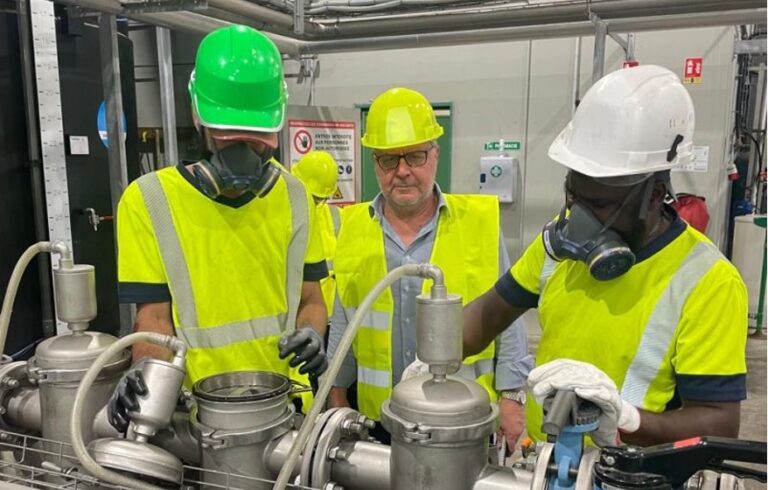
The verification of a supplier is usually a one-day audit performed by a qualified inspector at the factory facilities. The purpose is to obtain objective information supporting the capacity and legitimacy of the supplier.
Supplier verification requires validating the following elements:
- General supplier information: tax identification number, location, contact, among others.
- Capacity and experience: number of employees, product portfolio, current clients, technology, and relevant industry certifications.
- Financial capacity: financial statements, credit limits, and payment policies.
- Quality and compliance: quality management system, safety standards, legal compliance, data protection policies, and social responsibility.
- Logistics and delivery: production capacity, inventory management, packaging, and shipping.
- Customer service: communication channels and technical support.
- Prices and commercial conditions: pricing and discount policies as well as product warranties.
As a result of the supplier verification audit, a detailed report is delivered with the findings and photographic evidence demonstrating factory conditions.
Other Complementary Audits for Supplier Evaluation
In addition to the initial verification of suppliers, there are complementary audits that may be necessary depending on the industry and the client’s level of demand, among them:
Audit solutions to consider when evaluating a supplier:
- QHSE Audit: Evaluates the set of practices that help organizations manage and control the quality of their products, the health and safety of their employees, and the environmental impact of their operations. This audit is carried out in just two days and verifies regulatory compliance with ISO 9001, ISO 14001, and ISO 45001.
- ISO 13485 Audit for medical device manufacturers. Validates the requirements of a quality management system that demonstrates the ability to provide medical devices and related services under standards demanded by the industry.
- VDA 6.3 Process Audit: Evaluates the quality and efficiency of processes in the automotive industry.
- IATF 16949 Audit: Covers the requirements to establish a quality management system that ensures consistent product quality, process efficiency, and regulatory compliance across the global automotive supply chain.
- Supply Chain Security Audit: Identifies risks in the stages of the supply chain, ensuring compliance and security.
The scope and depth of the evaluation will depend on the specific industry to which the company belongs, the type of products or services supplied, and the strategic impact the supplier has on the organization.
Mexico, A Market with Opportunities and Risks
Thousands of Mexican suppliers have maintained quality and professionalism after explosive growth. But many still operate informally or are simply not ready to take on serious commitments.
Industries such as automotive, electronics, textiles, medical devices, or consumer goods have found in Mexico a source of supply with competitive advantages. However, those advantages are lost when the business relationship starts badly.
That is why having a professional evaluation at the beginning — before signing contracts or transferring molds or intellectual property — is an investment that can save you many headaches.
How do Leading Companies Evaluate Their Suppliers?
Companies focused on quality usually implement continuous evaluation programs. It is not only about approving a supplier at the beginning but about measuring its performance over time. Delivery indicators, quality, response to problems, and contractual compliance, among others, are reviewed.
Some even work on developing their suppliers: they identify areas for improvement and support them to reach better standards. Thus, everyone wins.
This approach is not exclusive to large corporations. Today, thanks to specialized external services, medium and small companies can also access professional evaluations without needing an internal quality or global purchasing department.
At Pro QC International, we believe that supplier evaluation is essential for decision-making. Therefore, we assist companies in ongoing processes that include on-site inspections, specific audits depending on the type of operation, and continuous performance monitoring. In addition, we work on supplier management: optimizing processes, closing gaps, and reaching the standards required by the buyer. We pursue a pragmatic approach, focused on concrete results.
How to Prepare for a Supplier Evaluation in Mexico?
Evaluating a supplier effectively begins with clear preparation. Before scheduling visits or requesting documents, it is important to define what is expected from the supplier and what the evaluation criteria will be. What risks could affect the operation if that supplier fails? How critical is it within the supply chain? These questions help establish priorities and the level of depth in the evaluation.
In the case of Mexico, there are contextual elements worth considering. Regional differences are significant: it is not the same to audit a company in the Bajío area as in the north of the country. Access to infrastructure, the quality of human talent, the maturity of management systems, or even regulatory compliance can vary greatly from one state to another. Knowing that context is the key to correctly interpreting the findings.
Mexico has a robust regulatory framework, but its application lacks consistency. While some suppliers operate under international standards such as IATF 16949, ISO 13485, or ISO 9001, others are just beginning to structure a quality management system. That does not mean they do not have potential, but they do need to be evaluated with the right tools and by professionals with experience in a particular Mexican territory.
In addition, many companies in Mexico — especially medium-sized ones — do not always have the documentation or traceability that an international buyer would expect.
That is why the evaluation must be done with a technical but also realistic perspective. Knowing how to distinguish between a critical weakness and an opportunity for improvement can make the difference between discarding a promising supplier or helping it to scale.
Risk Prevention in the Supply Chain
A well-designed supplier evaluation can prevent several problems that usually arise when starting a business relationship without sufficient prior information. Among the most common:
- Late deliveries that affect production schedules or time-to-market.
- Inconsistent quality that leads to returns, rework, or claims from end customers.
- Lack of regulatory compliance, both in local standards and in international standards required by the industry.
- Inadequate labor practices, which may represent a reputational risk for the brand.
- Lack of transparency in processes or undisclosed subcontracting, which generates loss of control over the supply chain.
In most cases, these problems cannot be detected with an offsite audit, questionnaire, or video call. They require being present, observing with a technical eye, asking the right questions, and having enough experience to read between the lines.
Cases Where Supplier Evaluation Made the Difference
Several companies that have chosen Mexico as a production hub have achieved outstanding results thanks to a rigorous supplier evaluation and selection strategy. A frequent case is that of companies that transfer molds or specialized machinery from their country of origin. When this type of asset is delivered without a prior evaluation of the supplier, the risk of loss or misuse is high.
On the other hand, those organizations that invest time in reviewing capabilities, processes, and backgrounds not only avoid problems but find strategic allies and grow together over the long term. This vision of evaluation not as a filter, but as a gateway to stronger business relationships, is gaining strength in the most advanced sourcing models.
The supplier landscape in Mexico: strengths and challenges
Strengths
- Well-developed industrial clusters in regions such as Bajío (Querétaro, Guanajuato, San Luis Potosí), northern Mexico (Chihuahua, Coahuila, Nuevo León, Baja California), and central areas such as Estado de México and Puebla.
- Export experience in key sectors such as automotive, aerospace, appliances, electronics, textiles, and medical devices.
- Solid logistical connections, especially with the U.S. by land.
- Legal and regulatory framework compatible with international requirements, thanks to the USMCA and bilateral agreements.
Challenges
- High degree of informality, especially among medium and small suppliers (according to INEGI, 55% of economic units operate without formal registration).
- Regional inequality in operational quality and business culture. It is not the same to audit a plant in Monterrey as in Veracruz or Chiapas, where infrastructure and access to specialized talent may be more limited.
- Lack of international certifications in many supplier companies. ISO 9001 is common, but standards such as IATF 16949, ISO 13485, or AS9100 are still far from being the norm outside major industrial groups.
- Low maturity in management systems, document traceability, and continuous improvement culture.
How Pro QC International Helps with Supplier Evaluation in Mexico
At Pro QC International, we have supported global, regional, and local companies evaluate, select, and manage suppliers throughout Mexico. Our local team is trained to provide Supplier Verification audits, Supplier Quality Audits, Factory and Supplier Audits, Quality Management System Audits, among others. Beyond the diagnosis, we also offer support in Supplier Management and Quality Control in Mexico. This includes the implementation of action plans as well as direct training of supplier staff in critical areas such as quality management, continuous improvement, or regulatory compliance. Each intervention is adapted to the sector, the type of product, and the client’s objective.
Conclusion
Choosing suppliers in Mexico represents a great opportunity, but it also requires rigor. The environment is competitive but not homogeneous. There are suppliers with great potential, but also risks that must be managed from the beginning. A professional, objective, and locally adapted evaluation not only protects your operation: it can open the door to more efficient, stable, and sustainable alliances.
In a scenario where speed, traceability, and quality are more important than ever, having a partner like Pro QC International can be the difference between a quality product and a high cost of poor quality. Contact us.